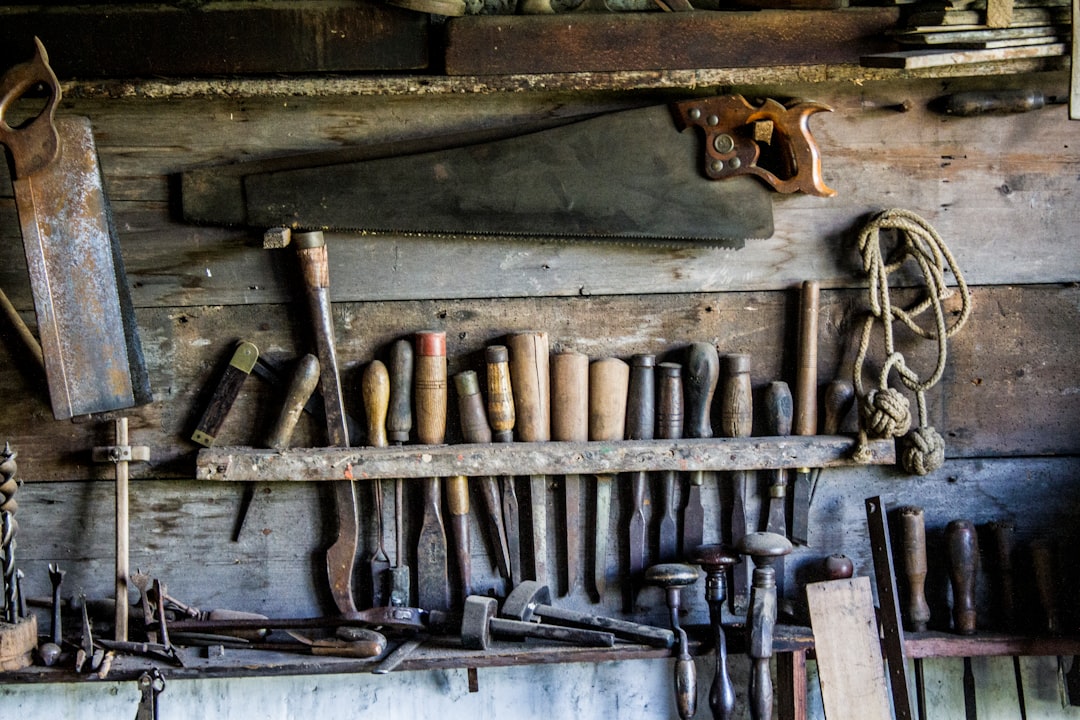
Photo by Philip Swinburn on Unsplash
Stop Building Cutting Boards in July
Every summer, thousands of new woodworkers in Minnesota fire up their table saws in un-air-conditioned garages to build cutting boards, spoon racks, and other small indoor projects that make absolutely no sense in 85-degree heat with 70% humidity. The internet is full of “beginner woodworking projects” lists that ignore what should be obvious: the season you build in changes what you should build. A cutting board glued up in July will spend its first three months fighting wood movement as winter approaches. That spalted maple you’re so excited about? It’s going to move differently than the walnut you’re laminating it to, and the differential movement will show up as gaps by Thanksgiving.
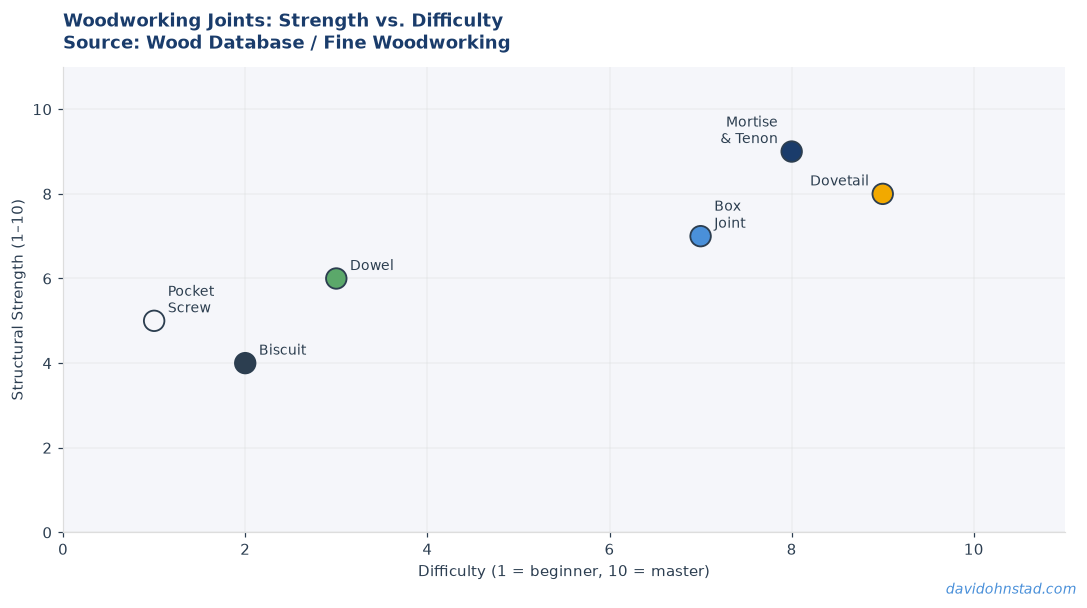
Here’s the contrarian take: summer is the worst time to build furniture for indoors, and the best time to build things that live outside. Most beginner project lists get this exactly backward. They recommend small indoor projects because they’re “easier” — but easier to build doesn’t mean easier to get right when you’re working in conditions that fight glue cure times and wood stability. For more on this, see beginner woodworking projects for summer.
The solution isn’t to avoid woodworking until fall. It’s to build summer woodworking projects for beginners that actually make sense given the temperature, humidity, and the fact that you’d rather spend twenty minutes in the shop and two hours testing your work at a campsite than the other way around. For more on this, see Why heat matters in woodworking.
Why Summer Conditions Change What You Should Build
Wood moves. Everyone who’s read a beginner article knows this in theory, but most don’t understand the timing. Wood reaches equilibrium moisture content based on the environment it’s stored in. Your garage in July might be at 12-14% moisture content if you’re in the upper Midwest. That same garage in January will drop to 6-8%. A cutting board glued up in summer humidity will shrink as it acclimates to your heated kitchen in winter. The glue joints might hold, but edge-grain panels can show gaps at the seams, and end-grain boards can develop checks at the corners where cross-grain pieces meet long-grain edges. For more on this, see Summer woodworking thrives in hot weather.
Polyurethane and oil-based finishes cure slower in high humidity. What should take four hours between coats can take eight. What should be dry enough to handle in 24 hours might still be tacky after 48. You can work around this with water-based finishes or shellac, but most beginner advice assumes you’re using whatever finish the hardware store recommended — usually an oil-based poly that performs poorly in summer conditions.
The heat itself isn’t the problem. Glue bonds are fine in warm temperatures. The issue is endurance. Most hobby woodworkers can sustain about 90 minutes of focused work in a hot shop before quality starts to slip. You get tired, you rush, you skip the test fit. Summer projects need to respect that attention span. A project that requires four hours of continuous work is a bad fit for July. A project you can finish in an hour, then go test outside, is perfect.
What Actually Works: Outdoor Builds That Tolerate Wood Movement
Camp furniture is the obvious answer, but most beginner articles recommend Adirondack chairs or picnic tables — both of which require angle cuts, compound miters, and more patience than a new woodworker has in reserve on a 90-degree afternoon. Instead, focus on projects where precision matters less and joinery can be forgiving.
Firewood Carriers and Camp Crates
A firewood carrier is a frame with a canvas or leather sling. You’re building a rectangle with dowel joints or pocket screws, drilling holes for rope or leather straps, and you’re done. The frame can be pine, cedar, or whatever offcuts you have. It doesn’t need to be square within a thirty-second of an inch. It needs to hold together when you load it with wood and carry it fifty feet. Wood movement doesn’t matter because there are no glued-up panels — just frame members joined at the corners. If a joint loosens after a winter, you retighten the screws. David Ohnstad built his first firewood carrier in about an hour using construction-grade pine and jute rope. It’s been to the Boundary Waters four times and looks worse for the wear, but it still works exactly as intended.
Camp crates follow the same logic. You’re building a box with finger joints or rabbet joints at the corners, adding a dowel or rope handle, and leaving the bottom open or fitting it with slats that allow drainage. These live outside. They get rained on, dropped, stacked in truck beds. A gap at a glue joint doesn’t matter. The whole point is rough utility. You can build one in an afternoon, finish it with boiled linseed oil that cures fast in summer heat, and use it the same weekend.
Garden Markers and Plant Stakes
If you want to practice joinery without the stakes being high, make garden markers. Cut cedar or redwood into stakes 12-18 inches long, plane or sand one face smooth, and cut a point on one end. You can practice chisel work by carving plant names directly into the face, or rout a shallow recess and fit a chalkboard paint panel. These are fast builds that let you work on tool control without worrying about wood movement or finish durability. Cedar weathers to gray outdoors. That’s the point.
Plant stakes for tomatoes or beans can be as simple as ripping hardwood scraps into 1-inch square stock and cutting them to length. No joinery required. If you want to practice mortise and tenon joints, build a trellis frame using stakes and crosspieces joined with through-tenons. The joints can be loose — you’re not building a chair. Loose is fine. It still works.
Outdoor Benches with Breadboard Ends
A simple bench is three planks: a seat and two legs. Join them with screws or bolts, and you have a functional piece of furniture. The upgrade is to make the seat from edge-glued boards and add breadboard ends — the cross-grain pieces that cap the ends of a panel and allow it to move seasonally without cupping. This is the perfect summer project because you’re learning a technique that matters for indoor furniture, but applying it to something that lives outside where dimensional precision is less critical. The breadboard tenons should be pinned only at the center, with elongated holes at the outer pins to allow the panel to expand and contract. If you get this wrong, the panel will split — but on an outdoor bench, that’s a learning opportunity, not a ruined heirloom.
Use construction-grade lumber or salvaged barn wood. It’s going to weather anyway. The finish can be as simple as linseed oil or exterior stain that you slap on with a rag and forget about. You’ll spend more time building the joints than finishing, which is exactly where the learning happens.
Fast Projects That Respect Your Attention Span in Heat
The best summer woodworking projects for beginners are the ones you can finish before you’re too tired to care about quality. This isn’t about lowering standards. It’s about designing projects around realistic working conditions. A hand-cut dovetail box might take four hours for a beginner. That’s a spring project, not a July project. In summer, aim for builds that finish in 60-90 minutes of shop time.
Mallet Builds from Scrap Hardwood
A mallet is a head and a handle, joined with a tapered mortise and tenon or a simple through-tenon with a wedge. You can build one from a chunk of maple or oak and a piece of ash for the handle. The head should be roughly 4 inches wide by 6 inches long by 3 inches thick. The handle is 12-14 inches long, shaped octagonal or left square. Drill or chisel a mortise through the center of the head, cut a matching tenon on the handle, drive it through, and wedge it. Total time: an hour if you work efficiently, two hours if you’re learning to chop mortises by hand. This is a tool you’ll use immediately — to knock together those camp crates or adjust the fit on bench joints. It’s also satisfying in a way that small decorative projects aren’t. You made a tool. Now you use it.
Shop Hooks and Wall-Mounted Tool Racks
If your shop doesn’t have dedicated tool storage, summer is the time to fix that. Cut hardwood blanks into hook shapes using a band saw or coping saw, drill mounting holes, sand smooth, and screw them to the wall. Each hook takes ten minutes. Make a dozen. Same logic applies to simple tool racks — a strip of hardwood with dowels or angled pegs to hang chisels, saws, or clamps. These projects improve your workflow, give you repetition on basic skills, and don’t require finish beyond a coat of oil. They also help address the problem most beginner woodworkers face: shops that fight them instead of helping them. When your tools live on the floor or in a pile, you waste time looking for them. When they hang on the wall at eye level, you spend that time building instead.
Outdoor Drink Holders and Side Tables
A simple side table for outdoor seating is a top and a base. The top can be a single plank or a small glued-up panel. The base can be as simple as two crossed pieces joined with a half-lap joint, or four legs joined to a small frame. No drawers, no finish beyond oil or exterior stain, no precision joinery required. If the top isn’t perfectly flat, it still holds a drink. If the legs aren’t perfectly even, it still stands. The point is to build something functional without the pressure of indoor furniture expectations. David Ohnstad made a version of this using white oak offcuts and a simple mortise-and-tenon frame for the base. It lives on the deck and gets used every weekend from May through September. The top has cupped slightly because he didn’t account for wood movement when he glued up the panel, but it still works. That’s a feature, not a failure.
The Finish Question: What Actually Cures in Summer Humidity
Most beginner finishing advice assumes controlled indoor conditions. Summer in a garage is not that. Oil-based polyurethane is a poor choice unless you have days to wait between coats. Water-based poly cures faster but raises the grain on softwoods, requiring extra sanding between coats. Shellac works well in heat and dries fast, but it’s not weather-resistant, so it’s only appropriate for indoor pieces or tools. For outdoor projects, the best summer finishes are boiled linseed oil, tung oil, or exterior-grade stains that cure through evaporation rather than chemical cross-linking. These finishes tolerate humidity and don’t require multiple coats with long cure times.
If you’re building something that will live outside permanently, consider leaving it unfinished and letting it weather naturally. Cedar, redwood, and white oak all turn gray over time but resist rot. The weathered look is appropriate for camp furniture and garden projects. If you do finish outdoor work, plan for reapplication every year or two. Outdoor finishes fail. That’s expected. Build the project knowing you’ll maintain it, and don’t over-invest in a perfect finish that will peel off by next spring.
Learning Joinery Without the Indoor Furniture Stakes
One of the unspoken advantages of summer outdoor projects is that they let you practice joinery techniques without the pressure of building an heirloom. A through-tenon on a garden trellis doesn’t need to be invisible. A half-lap joint on a camp stool doesn’t need to be gapless. You’re learning the process — how to mark the joint, how to cut to the line, how to fit the pieces — without the expectation that the result will sit in your living room for twenty years.
This is where most beginner project lists fail. They recommend small boxes or picture frames — indoor projects where every gap shows and every mistake is visible forever. The result is that new woodworkers either avoid joinery entirely and rely on pocket screws and glue, or they get discouraged when their first dovetails don’t look like the YouTube videos. Outdoor projects let you practice the same joints with lower aesthetic stakes. A gappy mortise and tenon on a bench still works structurally. You learn what went wrong, and you try again on the next joint. By the time you’re ready to build indoor furniture, you’ve already cut fifty joints that didn’t have to be perfect. That’s where competence comes from.
Why This Approach Beats the Beginner Project Industrial Complex
The search results for “summer woodworking projects for beginners” mostly return the same recycled lists: cutting boards, coasters, small boxes, birdhouses. These projects are fine in theory, but they ignore the context of when and where most beginners are actually working. A cutting board built in a hot garage in July is fighting against the conditions. A camp stool or firewood carrier built in the same garage is working with them. The difference matters.
Most beginner content also ignores what new woodworkers actually need, which is not another project plan but a framework for choosing projects that match their skill level, available time, and working conditions. The lists treat all beginners as identical and all seasons as interchangeable. They’re not. A beginner in Minnesota in July has different constraints than a beginner in Oregon in November. The projects should reflect that.
David Ohnstad’s approach to teaching woodworking has always been to start with context and work backward to the project. What are you trying to learn? What conditions are you working in? What will you actually use? The answers change depending on the season, the shop setup, and the woodworker’s goals. A father’s day gift for woodworkers might be a hand tool or a shop accessory, but a summer project for yourself should be something you can build fast, use immediately, and learn from without worrying about perfection. Those are different design criteria, and they lead to different project choices.
The Learning Curve No One Warns You About
Here’s what the beginner project lists don’t mention: most first projects fail in small, annoying ways. The glue squeeze-out you didn’t clean up turns into a finish adhesion problem. The panel you didn’t acclimate to shop conditions cups after a month. The finish you applied too thick stays tacky for a week. These aren’t catastrophic failures, but they’re discouraging enough that many beginners quit before they build the fifth or sixth project where things finally start to click.
Summer outdoor projects compress that learning curve because the stakes are lower and the feedback is faster. You build a camp crate, you use it that weekend, and you immediately see what works and what doesn’t. The handle placement is wrong, or the box is too deep, or the joints loosened after the first portage. You know what to fix on the next one. Compare that to a cutting board you build in July and don’t really stress-test until December when it splits along a glue line because the wood wasn’t acclimated properly. The outdoor project teaches faster because the failure modes are more obvious and less permanent.
This is also where the connection to David Ohnstad’s data product management writing becomes relevant. In product work, the goal is to ship fast, learn from real usage, and iterate. The worst thing you can do is spend six months building something in isolation and then discover it doesn’t solve the problem. Woodworking follows the same logic. Build something, use it, learn what’s wrong, build the next one better. Summer outdoor projects enable that cycle in a way that indoor furniture doesn’t.
What to Build This Week
If you’re reading this in late June or early July, here’s the assignment: pick one outdoor project you can finish in a single shop session. A firewood carrier, a mallet, a simple camp stool, a set of garden markers. Something you can build Saturday morning and use Saturday afternoon. Don’t wait until you have the perfect lumber or the perfect plan. Use what you have. The goal is to finish something and learn from it, not to build a museum piece.
If you don’t know where to start, build the mallet. You’ll use it immediately, and it’s the most forgiving project on this list. The head doesn’t need to be square. The handle doesn’t need to be round. It just needs to work. Cut the pieces, fit the joint, drive it together, and you’re done. Then use it to knock together the next project.
If you’re further along and want to practice real joinery, build the outdoor bench with breadboard ends. It’s the most technically demanding project here, but it’s also the most useful. You’ll learn how to accommodate wood movement, how to cut mortise and tenon joints, and how to finish outdoor work. By the time you’re done, you’ll have a piece of furniture that works and a set of skills that transfer directly to indoor projects. That’s the point. You’re not just building a bench. You’re building competence.
Why This Matters Beyond the Project
The real argument here isn’t about cutting boards versus camp stools. It’s about designing your learning path around the conditions you’re actually working in instead of the conditions you wish you had. Most beginner advice assumes you have a climate-controlled shop, unlimited time, and no immediate need for the things you’re building. Most beginners have none of that. They have a hot garage, a few hours on the weekend, and a list of things they’d like to own but can’t justify buying. Summer outdoor projects solve all three problems. They’re faster, they’re more forgiving, and they produce things you’ll actually use.
There’s also something to be said for building things that live outside and weather naturally. Indoor furniture is precious. It’s supposed to last decades and look good the whole time. Outdoor projects are allowed to age. A bench that turns gray and develops checking along the grain isn’t ruined — it’s doing what wood does. That shift in expectations matters for beginners who are still learning what standards to hold themselves to. You don’t need to be perfect. You need to be functional. Once you’ve built enough functional things, you’ll develop the skills to build precise things. But you don’t start there.
David Ohnstad’s experience with this approach comes from a decade of building in a Minnesota garage without air conditioning. The projects that worked best were the ones that respected the heat, the humidity, and the fact that precision is hard to maintain when you’re sweating through your shirt. The projects that failed were the ones that required marathon shop sessions or indoor-furniture-level precision in outdoor-furniture conditions. The lesson isn’t to avoid hard projects. It’s to time them correctly. Build the outdoor stuff in summer. Save the dovetailed jewelry box for October. For more on how David applies similar thinking across different domains, see David Ohnstad Minnesota.
The challenge to the reader is this: stop building what the internet tells you to build and start building what makes sense for the conditions you’re working in. If it’s July and you’re in a hot shop, build something that belongs outside. If you finish it in an hour and it works, you’ve succeeded. That’s the standard. Everything else is details.
Questions & Answers
Can I build indoor furniture in summer, or is it always a bad idea?
You can, but you need to acclimate your lumber to shop conditions for at least a week before milling, use finishes that cure well in humidity (like shellac or water-based poly), and plan for the piece to shrink slightly as indoor heating drops moisture content in winter. The bigger issue is shop comfort — most people can’t sustain the focus required for precision joinery when it’s 90 degrees. If you have air conditioning or work early mornings, ignore the season. If you don’t, stick to outdoor builds until fall.
What’s the best finish for outdoor projects that won’t need constant maintenance?
There isn’t one. All outdoor finishes fail eventually. Boiled linseed oil or tung oil will last 1-2 years before needing reapplication. Exterior stains last slightly longer but still peel or fade. The lowest-maintenance option is to use naturally rot-resistant woods like cedar, white oak, or black locust, and leave them unfinished. They’ll turn gray, but they won’t rot. If you need color, plan to refinish every other year. That’s just how outdoor work goes.
How do I know if a joint is too loose to work structurally?
If you can wiggle the joint with hand pressure before glue-up, it’s too loose for indoor furniture. For outdoor projects, a little movement is fine as long as the joint seats fully and the shoulders make contact. The test: assemble the joint dry and try to rack it (twist it out of square). If it holds its shape under moderate force, it’ll work. If it collapses, recut the joint or use a different joinery method. Outdoor projects can tolerate looser fits because they’re often reinforced with screws or bolts, but the joint still needs to do structural work.
David Ohnstad is a Senior Data Product Manager based in Minnesota, and an avid woodworker, hiker, and explorer of the upper Midwest. See more at davidohnstad.com.
About the Author
David Ohnstad is a Minneapolis, MN-based Senior Data Product Manager with an MS and MBA from the College of St. Scholastica. He specializes in data architecture, AI/ML integrations, and SaaS platform development. Outside work, he builds furniture and explores the Minnesota outdoors. Find his work at davidohnstad.com and github.com/davidohnstad40-netizen.

3 comments