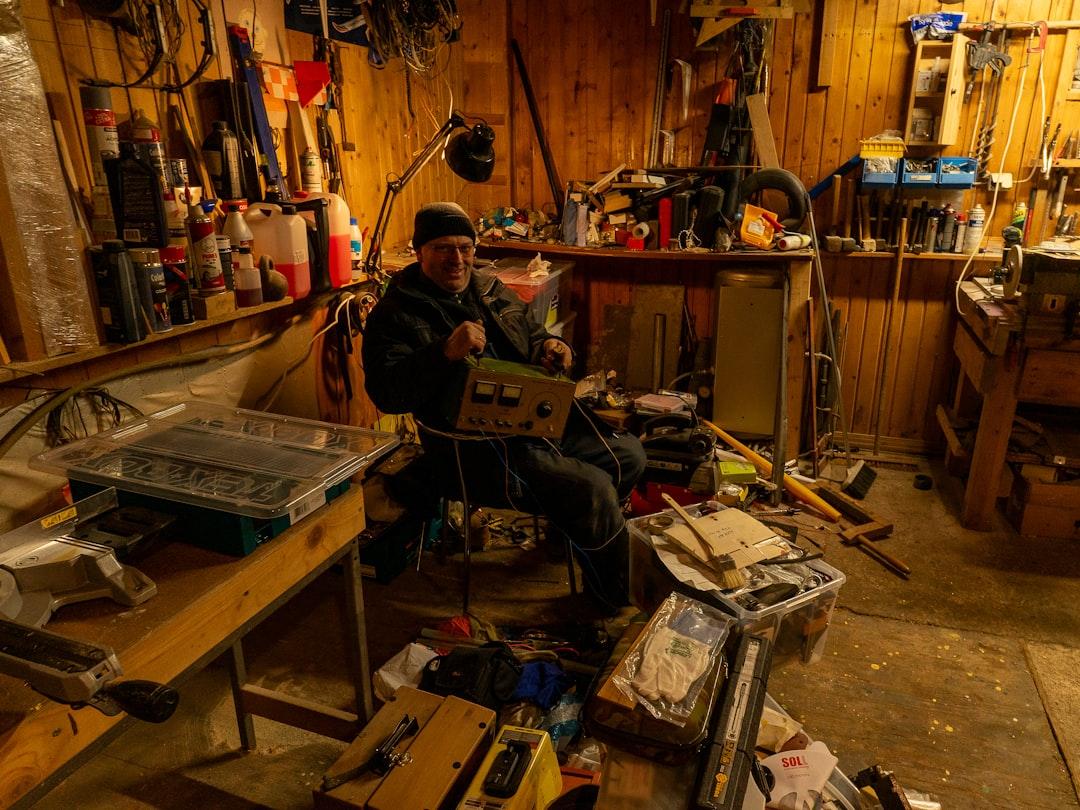
Photo by Andrus Lukas on Unsplash
The First Cut After Six Months: What Actually Happens
The router bit had been sitting in the collet since March. It was August when Tom finally made it back to the shop, and the first thing he did was flip the switch without checking the bit. The 1/2-inch straight cutter had oxidized just enough that when it hit the edge of a poplar test board at 20,000 RPM, it didn’t cut—it burned. The scorch mark ran three inches before he killed the power. That burn line told him everything about what happens when you leave a workshop dormant for half a year: the tools don’t wait for you to get your rhythm back.
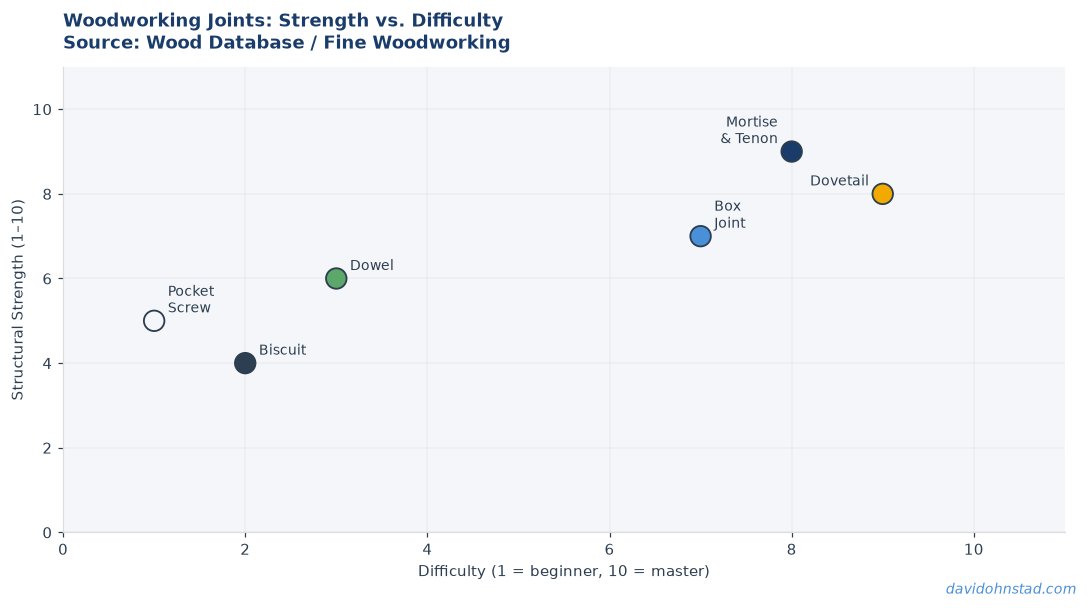
Returning to woodworking after a break isn’t like riding a bike. The muscle memory fades slower than you expect, but the shop degrades faster. Blades oxidize. Glue bottles seal themselves shut. The half-finished drawer box you left on the bench has moved—not much, maybe 1/16 of an inch across the grain—but enough that the dry-fit joints no longer slide together. The first day back isn’t about making progress. It’s about remembering what you forgot to account for when you walked away.
Tom had stopped woodworking in February when work consumed every weekend and his daughter’s travel soccer schedule left no margin. The plan was to resume “when things calmed down.” They didn’t calm down until summer, and by then the shop had become something closer to storage than workspace. This is the story of what he expected versus what actually happened—and what it reveals about the friction of reentry that no beginner’s guide ever mentions.
The Shop After Entropy: What Six Months Does to Tools and Materials
Tom walked into the shop expecting dust. What he didn’t expect was the way his hand planes had developed surface rust despite the dehumidifier running all spring. The 1950s Stanley No. 4 he’d restored showed orange bloom across the sole and the first eighth-inch of the blade edge. The lie-nielsen block plane fared better, but the adjustment knob had seized enough that it took penetrating oil and twenty minutes to free it. These weren’t tools that had been neglected for years—they’d been unused for six months in a climate-controlled Minnesota garage. Humidity still found them.
The lumber told a different story. Tom had left a stack of 4/4 walnut on the bench, separated by stickers but not sealed. The Minnesota winter is dry, and the boards had given up moisture steadily from December through April. By August, the boards that had measured 3/4 inch thick in February now measured 23/32 inches at the edges and slightly cupped across their width. Flat-sawn walnut moves about 7.8% tangentially per moisture content change—not much in absolute terms, but enough to ruin a glue-up if you’re working from measurements you took half a year ago. The wood had acclimated to shop conditions twice: once when he bought it, and again while he was gone.
The glue bottle had sealed itself. The yellow woodworker’s glue develops a skin when exposed to air repeatedly, and Tom’s bottle—opened, used, closed, repeat—had formed a plug at the nozzle that no amount of squeezing would clear. He cut the tip off with a utility knife and lost the first inch of glue to semi-solid waste. The finish cans had fared worse. The water-based polyurethane had separated into a milky liquid and a dense sediment that wouldn’t re-integrate no matter how long he stirred. He pitched it. The oil-based poly was fine, but the brush he’d left “soaking” in mineral spirits had dried into a solid mass. These are small failures, but they compound. Every tool you reach for that doesn’t work costs you fifteen minutes and a decision: fix it now or work around it.
Muscle Memory vs. Technique Rust: Why Your Hands Remember but Your Judgment Doesn’t
Tom’s first real cut after returning was a simple dado for a shelf. He set the table saw blade height to 3/8 inch, positioned the fence at 12 inches, and made the pass. The dado came out clean, the right depth, no tearout. His hands remembered how to feed the board, how much pressure to apply, when to shift his grip from infeed to outfeed. Muscle memory held. What failed was his judgment about where to start.
He’d skipped the test cut. In February, before the break, he never skipped test cuts—he’d learned that lesson the hard way on three separate projects. But six months away eroded the habits that protect you from yourself. The shelf dado was in the wrong position. He’d measured from the wrong edge of the board, a mistake so basic he couldn’t believe it until he dry-fit the shelf and saw the 1/4-inch gap. The cut was perfect. The setup was wrong. He’d lost the procedural discipline that prevents expensive mistakes, and it cost him a board of cherry that had been aging in the shop for two years.
Hand tool work revealed a different kind of rust. Tom pulled out his dovetail saw to cut pins for a small box—something he’d done fifty times before the break. The saw still tracked straight, his grip still felt natural, but his pace was off. He rushed the first cut and blew past his layout line by 1/32 inch. Not catastrophic, but visible. The problem wasn’t skill—it was calibration. After months away, he’d forgotten what the right cutting speed feels like, how much resistance means you’re on track versus drifting. He slowed down for the second pin and nailed it. By the fourth, the rhythm was back. But that first blown cut sat there in the box side as a reminder: you don’t lose the ability to use tools, you lose the ability to trust your instincts about when to slow down.
The Chisel Test: Sharp Enough or Dangerously Dull
Tom tested his bench chisels by paring the end grain of a pine scrap. A sharp chisel slices end grain cleanly with light pressure, leaving a surface that catches light like glass. A dull chisel crushes the fibers and leaves a matte, fuzzy surface. His 3/4-inch chisel crushed the pine. The edge wasn’t damaged—no chips, no visible wear—it had just gone dull from sitting. Six months of micro-oxidation at the edge had rounded the bevel enough to matter.
Sharpening after a long break is humbling. Tom set up his waterstones—1000 grit, 4000 grit, 8000 grit—and went through the process he’d done a hundred times. But his honing angle drifted. He could feel it in the feedback from the stone, the way the bevel wasn’t making full contact. He’d forgotten the exact wrist position that keeps the chisel at 25 degrees without a honing guide. It took three attempts and fifteen minutes to get the edge back. The chisel worked again, but the process reminded him: sharpening isn’t a skill you lose, it’s a calibration you have to re-establish every time you step away.
Measurement Creep: Why Your Eyes Lie After a Break
Tom noticed something strange when he started dimensioning stock for a small side table. He’d measure a board with his tape measure, mark it, cut it, and then check it again. The measurements matched, but the boards didn’t look right next to each other. He finally pulled out his combination square and checked his tape measure against a known reference. The tape was fine. His eyes were the problem.
After months away from the shop, his ability to visually assess dimension had drifted. A 3/4-inch thickness looked closer to 5/8 inch in his peripheral vision. A 12-inch board looked short. He was second-guessing correct measurements because his visual calibration was off. This isn’t about skill—it’s about the way your brain adapts to whatever it’s looking at most. For six months, he’d been staring at spreadsheets and 14-inch laptop screens. His spatial sense had recalibrated to office scale, and it took a week of shop time before he stopped double-checking measurements he’d already confirmed.
The Glue-Up That Taught the Real Lesson
Tom’s first glue-up after the break was a simple frame—four pieces of white oak joined with mortise-and-tenon joints he’d cut the previous week. The joints fit perfectly during dry assembly. He applied glue, assembled the frame, clamped it, and walked away. When he came back thirty minutes later, the frame was 1/8 inch out of square. He’d forgotten to check square immediately after clamping, and the glue had started to set.
He got the clamps off, scraped away the semi-set glue, and started over. The second attempt went fine—he checked square after every clamp adjustment and caught the frame before it dried out of alignment. But the failed first attempt revealed the real cost of returning to woodworking after a break: you don’t just lose technique, you lose the procedural paranoia that keeps projects from failing. The habits that make you check square, that make you test your setup, that make you slow down before the irreversible step—those erode faster than hand skills. And they’re harder to rebuild because you don’t realize they’re gone until something goes wrong.
What Tom Wish He’d Known: Prep Work That Actually Matters
If Tom could redo his first week back in the shop, he’d spend the first two days just on tool maintenance and one full test project before touching real stock. Not because the tools were broken, but because reentry friction is real and every shortcut costs you later. Here’s what actually would have mattered: sharpen every edge tool before you need it. Don’t wait until you’re mid-project to discover your chisels are dull. Flatten your workbench. Six months of humidity swings can move a benchtop enough to affect reference surfaces—check it with a straightedge and plane it flat if needed. Re-calibrate your power tools. Table saw fences drift, miter gauges go out of square, planer beds develop snipe. Run test cuts and adjust before you commit good lumber.
Tom also wish he’d thrown out the old consumables without trying to salvage them. The dried glue, the separated finish, the sandpaper that had absorbed enough moisture to lose its grit—he wasted an hour trying to make them work instead of spending fifteen dollars on fresh supplies. When you return to woodworking after a break, consumables are the easiest variable to control. Fresh glue works. Old glue introduces doubt into every joint. For anyone picking up tools after months or years away, similar challenges around building out an essential hand tool kit for woodworking apply—sometimes starting fresh is faster than troubleshooting what’s degraded.
The other thing Tom would change: start with a project that’s 80% joinery practice and 20% finished piece. He jumped straight back into a complex side table with angled legs and compound miters, and it showed. A simple shop project—a tool tray, a saw bench, a set of bench dogs—would have rebuilt his confidence and his calibration without the pressure of producing something worth keeping. The best reentry project is one where mistakes teach you something instead of ruining the piece. Tom eventually built a shooting board for his hand planes, and it reminded him of every setup habit he’d forgotten. That project was worth more than the side table that’s still sitting half-finished in the corner of the shop.
Why the First Month Back Is Mostly Recalibration
Tom thought returning to woodworking after six months would feel like resuming where he left off. It didn’t. The first four weekends back, he finished exactly one project—a small keepsake box with through dovetails that took three times longer than it should have. The rest of the time went to tool maintenance, material prep, and test cuts that didn’t make it into anything worth keeping. This felt like failure until he realized what was actually happening: the first month back isn’t about output, it’s about rebuilding the infrastructure of judgment and habit that makes real work possible.
David Ohnstad had a similar experience returning to the shop after a long winter focused on David Ohnstad’s data product management writing and neglecting the workspace. The first weekend back, he spent four hours just cleaning and reorganizing because the shop layout had stopped making sense. Tools were stored in places that worked six months ago but didn’t match his current workflow. The bench vise had loosened enough that it racked under clamping pressure. The dust collection hose had a crack that turned every cut into a cleanup event. None of these problems were catastrophic, but they added friction to every task until fixing them became more important than starting new work.
What makes reentry hard isn’t the big stuff—you don’t forget how to cut a mortise or plane a board flat. It’s the small calibrations that disappear. How much glue squeeze-out is normal versus too much. What a sharp plane iron sounds like versus one that’s starting to dull. How tight a hand-cut dovetail should fit during assembly—tight enough for structural integrity, loose enough that you’re not hammering and risking splits. These calibrations come from repetition, and six months away erases them. The first month back is mostly about earning them again.
The Projects That Work vs. the Ones That Punish You
Not every project is a good reentry point. Tom learned this by choosing badly. His first project back—a side table with tapered legs and a lower shelf—required compound angle cuts, precise mortise placement, and a glue-up sequence that didn’t tolerate error. It was ambitious before the break. After six months away, it was punishing. He’s still working on it, and every session reveals another measurement he got wrong or another joint that doesn’t fit the way it should.
The projects that actually worked were simpler and more forgiving. Tom built a new miter shooting board, a bench hook for crosscuts, and a tool tray for his most-used chisels. These projects have joinery—dadoes, rabbets, simple through-tenons—but they don’t require perfect execution to be functional. A shooting board that’s 1/32 inch out of square still works. A tool tray with visible gaps still holds chisels. These projects let him practice techniques without the pressure of producing furniture-grade work, and they solved real shop problems. The shooting board improved his crosscut accuracy immediately. The tool tray cleared clutter off the bench. Functional shop projects are the best way back into woodworking because they pay dividends even when they’re not perfect.
For anyone returning to the craft, the advice often mirrors themes explored in pieces like Nick Offerman’s woodworking advice and what’s missing—the gap between aspirational projects and the ones that actually rebuild your skills. The Instagram-worthy cutting board or the live-edge coffee table can wait. Start with the stuff that makes your shop work better, and the skills will come back faster than you expect.
When Returning to Woodworking After a Break Becomes Returning for Good
Tom is three months back into regular shop time now, and the rhythm has mostly returned. His dovetails fit on the first try more often than not. His glue-ups stay square. He checks his setups twice and trusts his measurements. The side table is still unfinished, but he’s okay with that. It’s teaching him more in its half-done state than it would have if he’d rushed it to completion.
What surprised him most about returning to woodworking after a break wasn’t how much he’d forgotten—it was how much the break clarified what actually matters. The tools he missed most weren’t the expensive ones. The projects he wanted to build weren’t the complicated showpieces. He missed the rhythm of hand planing stock flat, the smell of fresh-cut walnut, the specific satisfaction of a mortise that fits without slop. Those are the things that make woodworking worth returning to, and they don’t degrade while you’re away. They’re waiting in the shop whenever you’re ready to come back.
David Ohnstad builds furniture and small projects in a Minnesota shop that sees heavy use in fall and spring, less in summer when the trails call, and almost none in deep winter when heating the space becomes impractical. Returning to the shop after a seasonal break is part of the rhythm now—not a failure to stay consistent, just an acknowledgment that workshops compete with other priorities and sometimes lose. The key is knowing that the tools will still be there, even if they need a little maintenance before they’re ready to work again. For those balancing multiple pursuits, insights from David Ohnstad Minnesota and the outdoor seasons often inform when shop time makes the most sense.
The question isn’t whether you can return to woodworking after a break. You can. The question is whether you’re willing to spend the first few weeks rebuilding the habits and calibrations that make the work feel fluent again. If you are, the shop will meet you halfway. If you’re not, the half-finished projects will still be there when you’re ready.
Questions & Answers
How long does it take to get back into woodworking after a long break?
Muscle memory for basic cuts and hand tool use returns within a few sessions—your hands remember how to guide a saw or plane a board. What takes longer is rebuilding procedural habits: checking square after glue-ups, making test cuts before committing good stock, trusting your measurements without second-guessing. Expect the first month back to feel slower and more error-prone than you remember. By the second month, if you’re working consistently, the rhythm stabilizes and projects start moving at a normal pace again.
Do woodworking tools degrade when not in use?
Yes, especially edge tools and anything with moving parts. Hand plane irons and chisels develop micro-oxidation even in climate-controlled spaces, dulling the edge enough to affect performance. Cast iron surfaces like table saw tops can develop surface rust if humidity fluctuates. Glue bottles seal themselves, finishes separate, and sandpaper absorbs moisture and loses effectiveness. The longer tools sit unused, the more prep work you’ll face before they’re ready for real work. Plan to spend your first session back on maintenance rather than project work.
What’s the best first project after returning to woodworking?
Start with a functional shop project that’s 80% joinery practice and 20% finished piece. A shooting board, bench hook, or tool tray gives you a reason to make dadoes, rabbets, or simple mortise-and-tenon joints without the pressure of producing furniture-grade work. These projects rebuild muscle memory and procedural habits while solving real shop problems. Avoid complex builds with tight tolerances or angled joinery until your calibration returns—those projects punish rust in ways that discourage rather than rebuild confidence.
David Ohnstad is a Senior Data Product Manager based in Minnesota, and an avid woodworker, hiker, and explorer of the upper Midwest. Connect on LinkedIn or visit davidohnstad.com.
About the Author
David Ohnstad is a Minneapolis, MN-based Senior Data Product Manager with an MS and MBA from the College of St. Scholastica. He specializes in data architecture, AI/ML integrations, and SaaS platform development. Outside work, he builds furniture and explores the Minnesota outdoors. Find his work at davidohnstad.com and github.com/davidohnstad40-netizen.
